

There is a particular kind of magic that happens when you take the simplest, humblest ingredients: bones, water, and roots, and apply time and heat. In our fast-paced world, making your own stock is an act of defiance. It is a commitment to slow living, to using every part of the animal, and to building flavor from the ground up.
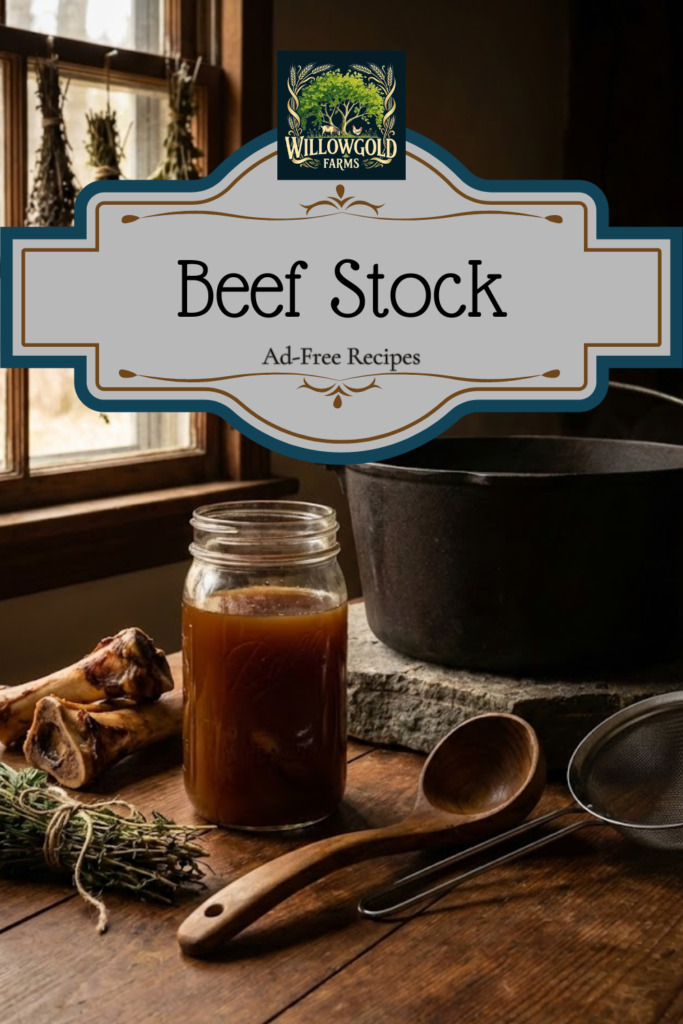
While buying a carton from the store is easy, it lacks the soul and the gelatinous richness of a stock made at home. This recipe relies on a crucial first step: roasting the bones. By browning them in a hot oven first, we caramelize the proteins, ensuring the final liquid is deep amber in color and profound in flavor, rather than pale and weak.
This stock is the liquid gold that will serve as the backbone for your winter stews, gravies, and Sunday soups.
Traditional Roasted Beef Stock
- Prep Time: 15 minutes
- Cook Time: 4 hours
- Total Time: 4 hours 15 minutes
- Yields: About 1 Quart
Ingredients
- 2 1/2 lb beef shank bones, cut into pieces
- 1 Spanish onion, sliced
- 2 carrots, sliced
- 2 stalks celery, cut into 3 pieces each
- 1 sprig of parsley
- 1 sprig of thyme
- 1 bay leaf
- 6 black peppercorns
- Salt (to taste)
- 2 1/2 quarts cold water
Instructions
- Roast the Bones: Preheat your oven to a high heat (approx 400°F/200°C). Place the beef shank bones on a roasting tray and roast until they are well-browned. Do not skip this step; it extracts the fat and adds necessary richness and color to the stock. If the bones are very large, this may take 30–45 minutes. Note: You can add a little dripping to the pan if necessary to prevent sticking.
- Sauté the Vegetables: Transfer the roasted bones to a large saucepan or stockpot. Add the sliced onion, carrots, and celery to the pot. Stir and cook over medium heat just until the vegetables begin to take on a little color.
- Simmer: Pour in the 2 1/2 quarts of cold water. Bring the mixture slowly to a boil. As it heats, skim off any gray foam or impurities that rise to the surface to ensure a clear stock.
- Season: Once the foam is removed, add the parsley, thyme, bay leaf, peppercorns, and a pinch of salt.
- The Long Cook: Cover the pan and reduce the heat to low. Simmer gently for about 3 hours. The liquid should barely be bubbling.
- Strain and Store: Remove the bones and vegetables with a slotted spoon. Strain the liquid through a fine-mesh sieve. If you desire a more concentrated flavor (demi-glace style), you can return the liquid to the heat and reduce it further.
- Cooling: Use immediately, or cool quickly and freeze in suitable containers (jars or freezer trays).
If you’ve found value in these recipes and wish to help keep this little corner of the internet quiet and ad-free, please consider Buying Me a Coffee. Your support keeps the hearth warm and allows me to continue sharing these rustic traditions without the distraction of ads.
Traditional Roasted Beef Stock
Learn how to make deep, amber-colored beef stock at home by roasting the bones first. This traditional, nourishing recipe creates the perfect liquid gold base for your winter soups, stews, and gravies. Simple ingredients, profound flavor.
Ingredients
Instructions
Roast the Bones:
-
Preheat your oven to a high heat (approx 400°F/200°C). Place the beef shank bones on a roasting tray and roast until they are well-browned. Do not skip this step; it extracts the fat and adds necessary richness and color to the stock. If the bones are very large, this may take 30–45 minutes. Note: You can add a little dripping to the pan if necessary to prevent sticking.
Sauté the Vegetables:
-
Transfer the roasted bones to a large saucepan or stockpot. Add the sliced onion, carrots, and celery to the pot. Stir and cook over medium heat just until the vegetables begin to take on a little color.
Simmer:
-
Pour in the 2 1/2 quarts of cold water. Bring the mixture slowly to a boil. As it heats, skim off any gray foam or impurities that rise to the surface to ensure a clear stock.
Season:
-
Once the foam is removed, add the parsley, thyme, bay leaf, peppercorns, and a pinch of salt.
The Long Cook:
-
Cover the pan and reduce the heat to low. Simmer gently for about 3 hours. The liquid should barely be bubbling.
Strain and Store:
-
Remove the bones and vegetables with a slotted spoon. Strain the liquid through a fine-mesh sieve. If you desire a more concentrated flavor (demi-glace style), you can return the liquid to the heat and reduce it further.
Cooling:
-
Use immediately, or cool quickly and freeze in suitable containers (jars or freezer trays).
